
Trace Bingham County Former Owners Backward
Bingham County publishes no online grantor-grantee index. Work backward from the current grantee toward earlier grantors. Because no published cutoff exists, the Recorder counter or a written request becomes essential for moving the Bingham County chain past the newest transfer.
| Source | Years It Covers | Where Held | What It Shows |
|---|---|---|---|
| Recorder transfer instruments | Exact online span not published | Recorder office or written request | Parties, dates, legal description, reference |
| County deed books and indexes | Exact runs not located online | Ask Recorder about originals and microfilm | Earlier grantor-grantee links |
| FamilySearch county collection | 1885-1948 collection | Online, sign-in may govern images | Assessment and tax leads, not title |
| Subdivision layer and plats | Current service with historic records | County GIS and recorded plat | Lot identity, developer, record number |
Start with the most recent deed. It names the current owner of record and usually names the seller too, which gives you the next name to chase. From there, a Bingham County property search runs backward one deed at a time, each deed record pointing to the parcel number and parties one transfer earlier.
Reconstruct the Bingham County Deed Chain
Every deed hands you the prior name. With that name, pull the earlier deed, then the one before it, until the chain of property records reaches the year you need. Keep the legal description or plat identity pinned beside each step, since a similar surname can quietly drag a Bingham County deed search onto the wrong parcel.
- Use the current parcel row to save the owner, RP number, instrument number, and legal description.
- Request the newest transfer and read its grantor, grantee, type, date, and book/page or instrument number.
- Search the grantor as an earlier grantee, then repeat with the same land description.
- When electronic access ends, continue through the office index, deed books, or available microfilm.
- Grantor
- The party conveying an interest.
- Grantee
- The party receiving that interest.
- Chain of title
- The ordered sequence of instruments affecting title.
- Reverse index
- An index organized by grantee for backward work.
- Quitclaim and warranty deed
- Different conveyance forms whose legal effect must be read in the instrument.
Bingham County Former Owners Offline
The Bingham County Recorder page lists contact details, hours, and recording fees. It publishes no public deed search of its own. So the office itself becomes the working tool. Ask the recorder for the grantor-grantee index, the newest transfer tied to the RP or instrument number, and the older volumes you need to keep walking the chain. Review the official Recorder access page pictured below.
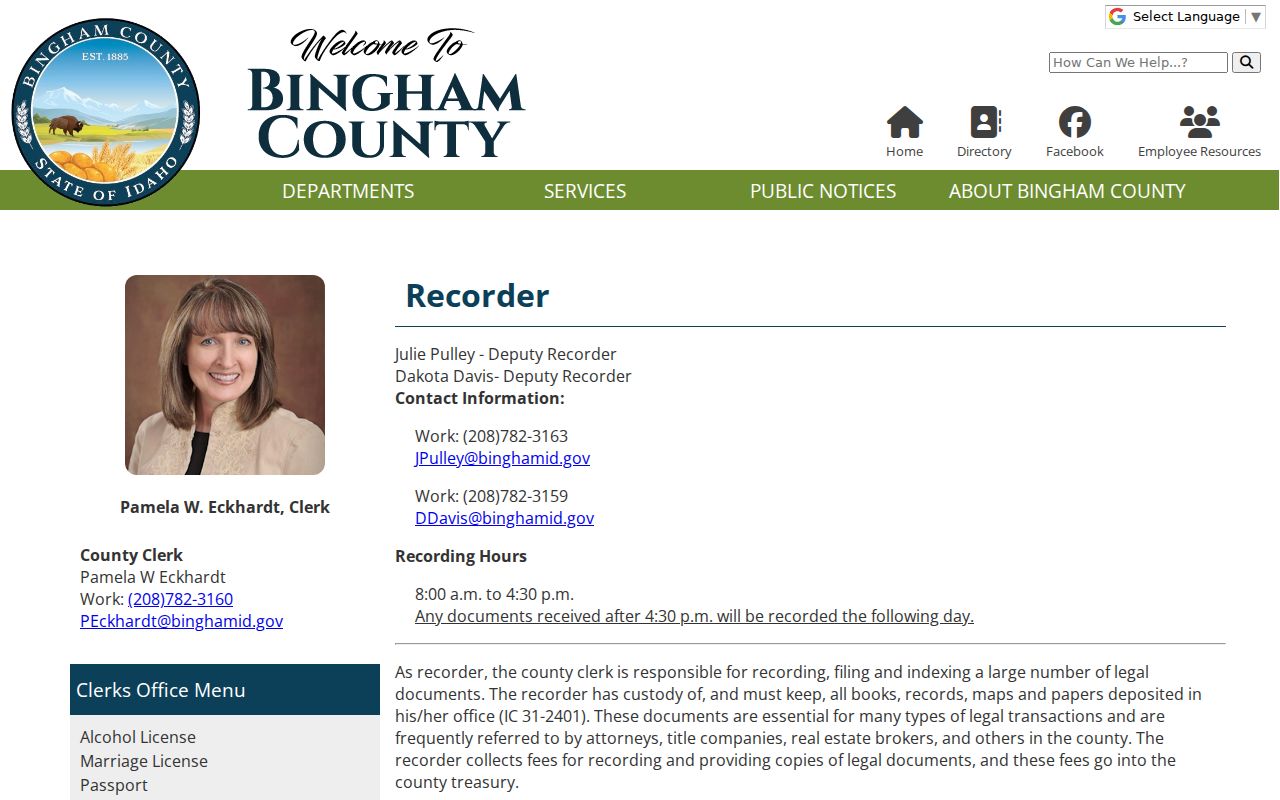
Some Bingham County records simply do not travel over the internet. For those deeds, the office itself is the fallback. The image shows what a visitor encounters when the search moves offline, rather than implying that every prior deed can be searched online. Plan accordingly.
Note: Documents received after 4:30 p.m. record the next business day, so retain timestamps near the newest link.
1885-1948 Bingham County Name Leads
Bingham County was created on January 13, 1885. Its early property records run deep. The FamilySearch Bingham County collection covers 1885 through 1948. It holds hundreds of thousands of indexed entries, including an 1890 assessment roll, tax registers from 1898 and 1899, and Abstract Land Department material spanning 1893 to 1909. Names drawn from those rolls can point toward a parcel's earlier owners when deed records alone fall short. Open the collection page shown here to begin a name search.
A taxpayer or assessed name can bridge a research gap. Still, treat it as a lead only. The owner of record is confirmed by a deed or another title-changing instrument, not by a tax roll entry alone.
Bingham County Prior Owners and Plats
Old addresses can shift over the decades. A subdivision name, lot and block, or township-range-section description holds steady. The Bingham County GIS subdivision layer supplies plat name, developer, surveyor, record number, jurisdiction, and a link to the recorded scan. That makes matching a former owner to the original plat far easier.
Before accepting a name, check it against the plat and the deed description together. A trustee substitution is not a conveyance on its own. Likewise, an easement or a release can change how a property is used. But it never changes the fee owner.
Bingham County Former Owners After Probate
Probate can move Bingham County real estate through several instruments. A court order may transfer title once recorded. A personal representative's deed may do the same, or an affidavit. Search Idaho iCourt for a case lead first. The actual file comes from the clerk on request. Sealed or exempt material stays off limits.
Keep the vital-record certificate separate. Idaho restricts newer vital records. That document supports a chain of ownership without replacing the conveyance or the court order itself.
Bingham County Past Owners in Archives
Blackfoot's digital newspaper archive spans titles from the 1880s into the 1930s. The legal notices inside are dense with property records. Deeds, probate, tax sales, subdivisions, dedications, and street changes all surface there. For names tied to addresses, the Idaho State Historical Society lists Bingham-area directory holdings covering 1964 through 1991. Those runs let you place a household on a street in a given year. A directory entry or a newspaper notice, though, is occupancy rather than title. Record the publication date and page. Then confirm the land link through Bingham County instruments at the Recorder.
Separate Conveyances From Other Instruments
A recorded document can touch land without selling it. Trust deeds, easements, releases, and substitutions of trustee all leave marks in Bingham County property records. None of them belongs in an owner timeline as a sale. Read the document type, the parties, the legal description, and the operative language first. Only then decide what actually changed.
Probate files and court orders raise the same problem. A case may point to a title lead, yet the order or the deed that follows it supplies the real transition. When a deed chain appears to jump, search the court context and then return to the Recorder for the recorded result. Preserve each date and reference. Never smooth a gap with a guess.
The clearest output is a table with one row per verified transfer: transfer date, grantor to grantee, deed type, and the book/page or instrument number. Note non-conveyance events separately.
Build a Source Ladder for Bingham County History
Start with the modern GIS map. Then pull the current Recorder or Assessor record for the parcel. City permit and planning files come next. Tax-deed and court material waits until the facts demand it. Older plats, tax rolls, directories, newspapers, and historical-society holdings form the lower rungs of the ladder.
The Bingham County Historical Society archive in Blackfoot holds manuscripts, photographs, and local history. It is worth a stop for any deep Bingham County search.
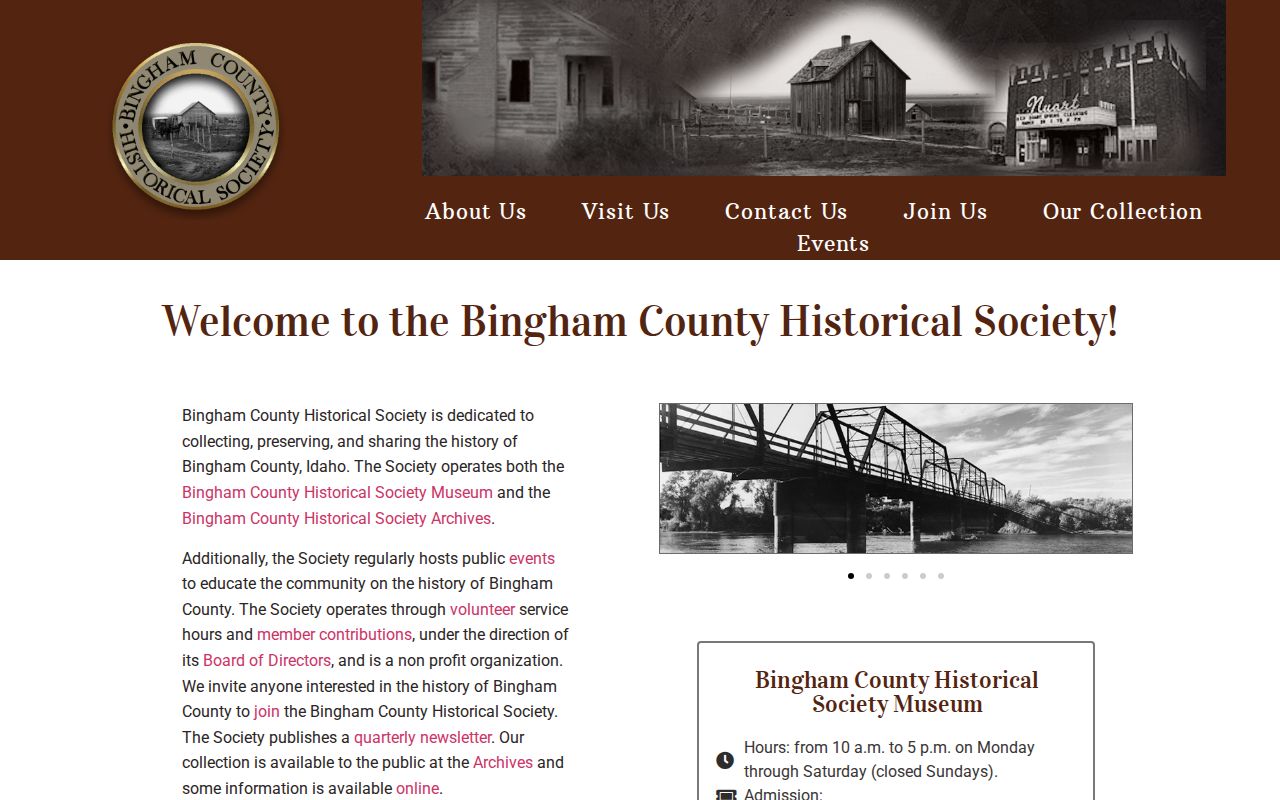
The local archive route holds up. Hours differ across the library's published pages. Call ahead and say whether the request concerns manuscripts, photographs, or record research. The Blackfoot Public Library maintains a Newspaper and Magazine Room. Its listings do not name every local title or database.
Every source carries a date, a custodian, and a limit. A directory shows association with an address. A tax roll names the assessed taxpayer. A plat establishes lot history, and a deed or court order records the title event. Keeping those roles distinct matters. It protects a former-owner timeline in Bingham County from attractive but unsupported stories.
How Far Bingham County Prior Owners Can Be Traced
Bingham County publishes no online finding aid naming the oldest deed book, the exact vault run, the microfilm span, or the electronic cutoff. That gap stays open. Ask the Recorder which originals survive. Ask which indexes exist, and whether older volumes have been digitized.
The 1885 county creation date and the 1885-1948 historical collection offer context, not an endpoint for title. County-era sources eventually stop. When they do, land-patent or predecessor-jurisdiction research may require a separate archive path keyed to the legal description.
No invented cutoff. Bingham County did not publish a verified online deed-index start year in the reviewed sources; older owners require office and archive work.
Completeness should be described honestly. A chain may cover every deed examined yet still stop before the county's oldest books. Note the last owner of record, the legal description at that point, the index or volume searched, and why the search stopped.
Keep corroborating finds outside the deed timeline until their role is clear. A tax register name shows an assessment relationship for its year. A directory shows a printed association with an address. A newspaper legal notice shows an event was announced. None of these proves a conveyance. When two sources point to the same former owner, use their dates to target the Recorder index, probate file, plat, or court order most likely to close the gap.
Photograph or cite the index page and deed reference the custodian permits. Log the search name exactly. Small spelling differences matter. Initials and entity suffixes can make a later chain impossible to reproduce. Record failed variants too. They explain why the next Bingham County search moved to a legal description, plat, or tax-roll lead.