
Bingham County Property Tax Fields
Two offices hold these records. The Assessor keeps ownership, parcel characteristics, exemptions, and market-based assessment fields. The Treasurer and Tax Collector handles billing, collections, and payment status. It also handles late charges and the tax-deed process. The public GIS row links the two systems. But treat it as reference rather than a live bill quote.
| Field | What It Shows | Where |
|---|---|---|
| Market and component values | Land, farm, residential, commercial, manufactured, and total fields where populated | Assessor and GIS |
| Year labels | Property, appraisal, and tax years, which are not interchangeable | Assessor and GIS |
| Exemption field | Homeown_Value when populated; a null field is not a universal finding | Assessor and GIS |
| Tax totals | Current total, installments, late charge, interest, and date fields | GIS snapshot and Treasurer |
| Bill status | Current payment amount and processing status at query time | Treasurer account |
Idaho assesses property at 100 percent of market value, less exemptions, to reach taxable value. The final tax then depends on the districts serving the parcel. It depends on their budgets and rates. A deed sale price stands apart. It is a transaction fact, not a dependable assessment field.
Bingham County Property Tax Years
The county's public parcel layer carries Prop_Year, Appr_Year, and Tax_Year. Record all three. Calling any of them "the year" can be a mistake. It may pin a value or bill to the wrong cycle. Photo dates and assessor initials are separate metadata. They do not show when title changed.
The Assessor states that each Idaho property is physically reappraised at least once every five years. That is not a fresh site visit every year. The office also tracks splits, ownership changes, maps, characteristics, exemptions, and tax relief. The roll shifts for reasons beyond sales.
The Bingham County Assessor's value explanation sets out the current-market-value standard and the reappraisal cycle.
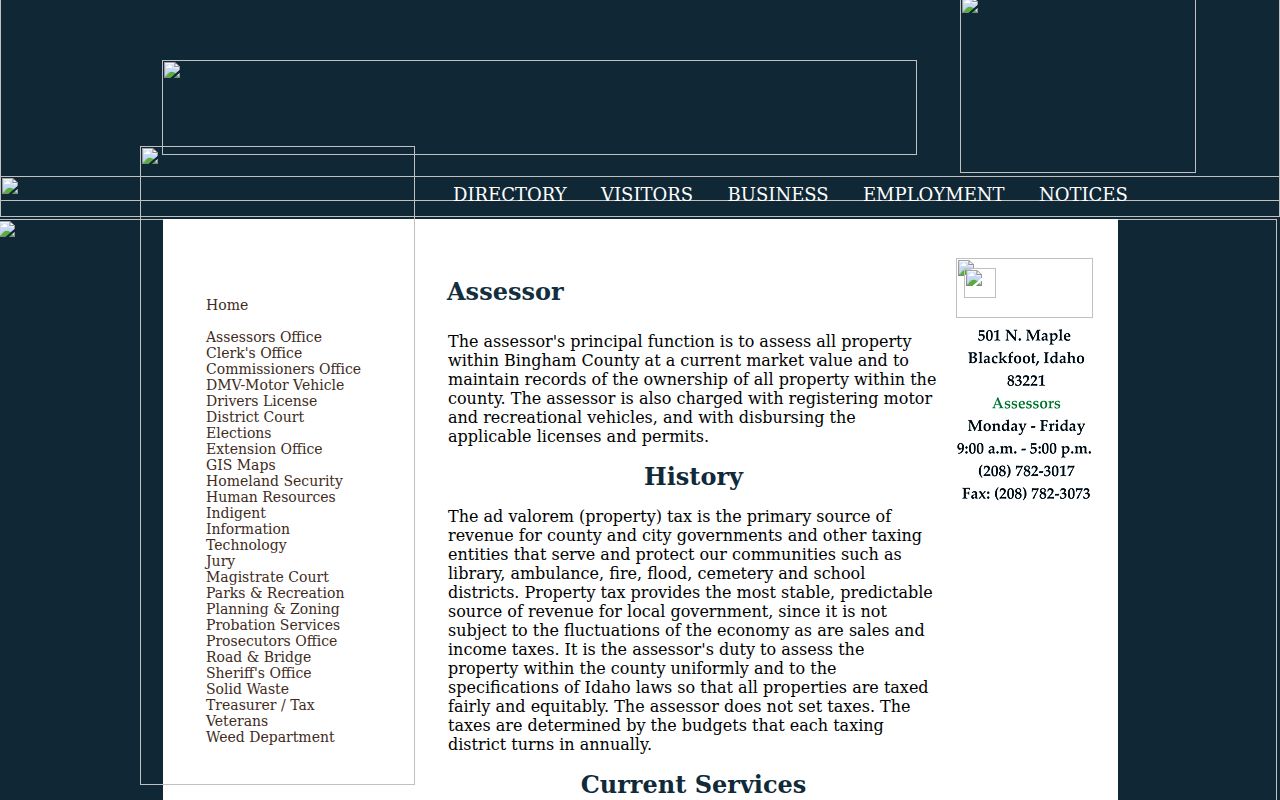
The office page supplies the valuation rule itself. Parcel-specific figures still come from a dated record query.
Read Bingham County Property Values
The GIS schema splits land, farm, residential, commercial, manufactured, property, market, and tax-value fields. Some read zero or blank. A live sample can even show a null homeowner-value field. That means the row returned nothing in that field. It does not mean the county has confirmed the parcel holds no exemption. Hold the match steady with the RP number and legal description. Then compare each value against its appraisal and tax-year labels. Want a fuller treatment of assessed, market, and transaction values? The Bingham County property value record keeps those concepts apart.
Find a Bingham County Tax Bill
The Treasurer's online payment screen asks for a parcel number and tax amount. It is not an address-search portal. Start in the county GIS when the RP number is unknown. Then confirm the amount against the current bill or the office. The online processor may lag behind updates.
- Locate the property in Bingham GIS by situs address or owner and copy the exact RP number.
- Use the current county bill to supply the tax amount required by the online processor.
- Compare the Treasurer status with the GIS tax year and query date. Do not quote a saved sample as current.
- Check late charges, interest, installment status, and tax-deed notices separately when delinquency is the concern.
- Assessed value
- The county's market-based value before relevant exemptions produce taxable value.
- Levy or tax rate
- The rate produced by the budgets and taxing districts that serve the parcel.
- Homeowner exemption
- Qualifying relief that can reduce taxable value when approved.
- Tax lien
- The public claim created by unpaid property tax under the governing process.
Keep the payment receipt. Idaho law cited by the county says a bill that never arrives does not excuse payment. So raise an address change or missing statement with the office promptly.
Bingham County Property Tax Payments
Bingham County accepts payment in the office with the bill. You can also use a silver drop box, mail, financial-institution bill pay, online, or phone. The drop box takes a check or money order with the tax stub or parcel number. It never takes cash. Mailed payments need the stub or parcel number too, and should arrive unstapled and untaped.
The posted schedule lists a card charge of two dollars or 2.5 percent, whichever is greater. It adds a one-dollar ACH or eCheck charge. Phone payment adds a $1.50 processor fee on top of the card charge. Confirm all current fees before picking a channel.
The county's property tax payment instructions walk through each route. They note that online amounts may not be current.
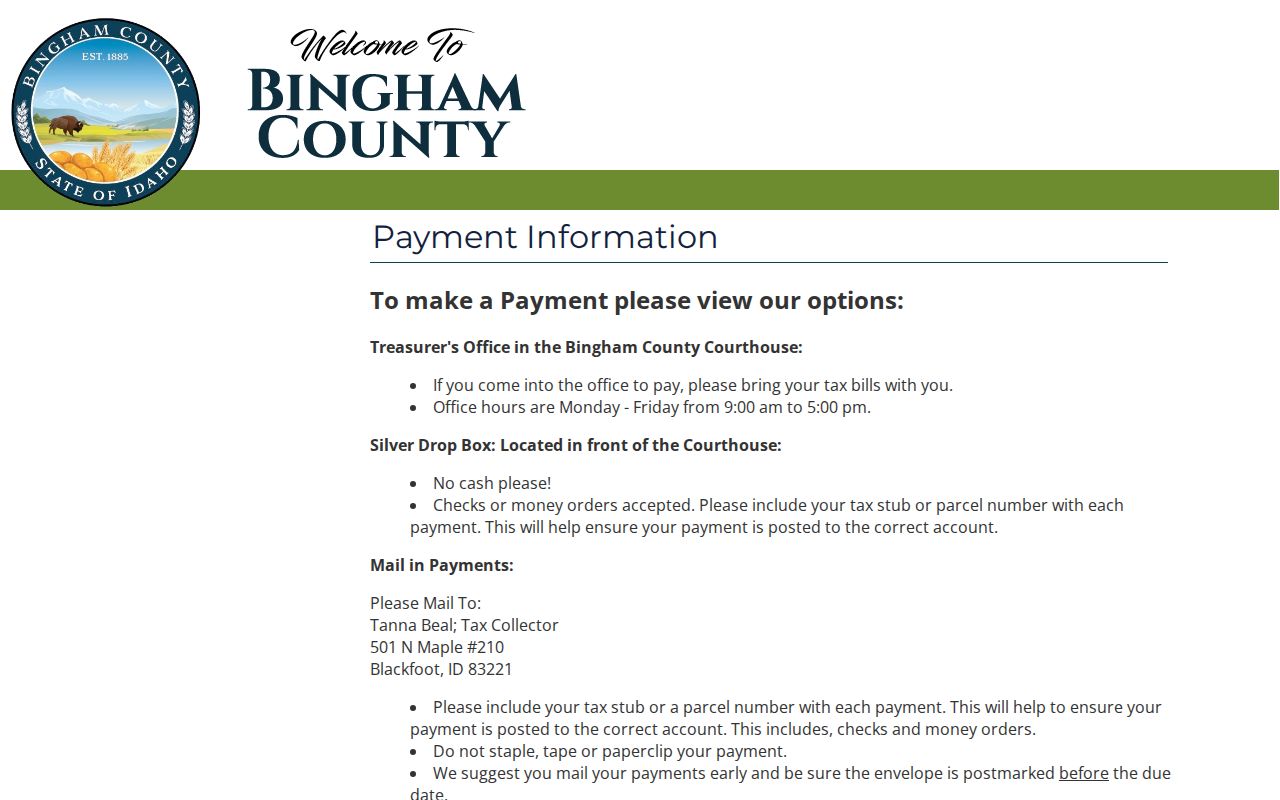
The official county payment page anchors each payment choice to its source rather than an outside link.
Bingham County Property Tax Login
The online account is a payment workflow, not an owner-and-address research index. It wants a parcel number and tax amount. Get both from current county material, and type the official address yourself. Retain the receipt and note the date checked. The Bingham County tax account login is the processor named on the county payment page.
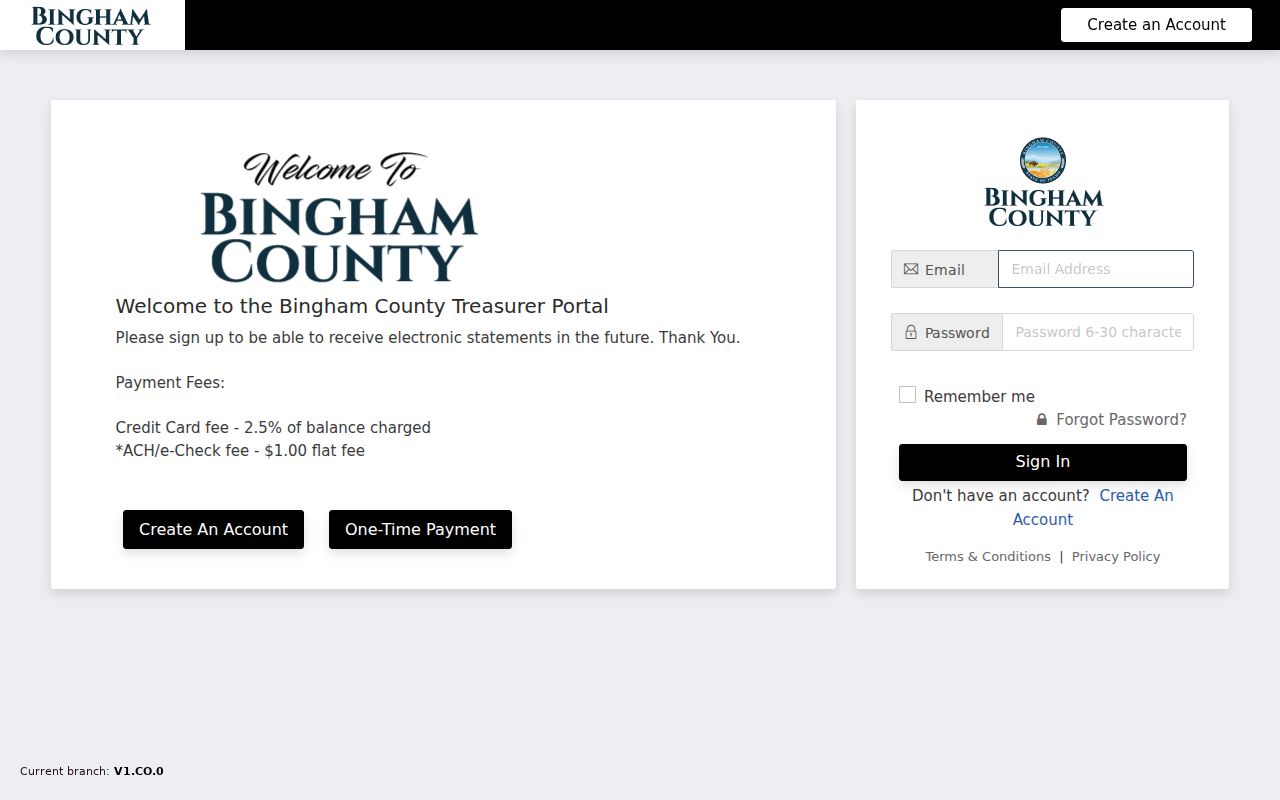
The login page's limited entry fields show why parcel discovery belongs in GIS first.
Bingham County Property Tax Delinquency
Full or first-half payment falls on December 20, or the next business day. The second half is due June 20, or the next business day. The county states a two-percent late charge on the unpaid balance. It also adds one-percent monthly interest from January 1. Confirm the current year's dates with the office. Bingham's tax-deed route starts after three years of delinquency. It runs through notices, publication, a hearing, and eventual recording. The tax account is one record. The published notice, the hearing file, and the recorded tax deed are distinct records as well. A delinquent balance alone is not a completed transfer.
Exemptions in Bingham Records
Exemptions lower taxable value; they do not erase the market evidence behind it. The county calendar lists Property Tax Reduction, often called Circuit Breaker. It also lists the application dates. The Assessor keeps the exemption and tax-relief data. Deadlines and rules shift, so follow the current Assessor instructions instead of an old form.
When you read Bingham County property tax records, line the exemption entry up with the same parcel. Match it to the tax year too. A blank GIS field proves little. Another office record may still exist. If the field matters to an appeal or a bill question, request the parcel record. Ask the Assessor for it.
Challenge a Bingham County Assessment
Assessment appeals go to the Bingham County Board of Equalization. The 2025 appeal form asks for the owner, parcel, current assessed value, requested value, purchase facts, property use, reasons, evidence, and a signature. Build your case with value records. These might be comparable sales, condition details, or factual errors tied to the parcel.
One caution on deadlines. The 2025 form printed June 21 at 5 p.m. The current Treasurer calendar gave June 27 as the last Board of Equalization appeal date. Neither figure should become a standing annual rule. Pull the current year's form. Confirm the due date with the Assessor or clerk before you file.
Confirm the appeal window. Bingham sources show year-specific dates that conflict. Use the current form and office instruction before filing.
Keep Tax and Title Separate
A paid bill proves no title. An assessor owner field is not a recorded conveyance. A market-value figure is not a sale appraisal, and a tax account never sets boundary lines. Bingham County property tax records work best for the question they were built to answer. For an audit-ready file, keep the RP number, legal description, tax year, appraisal year, and query date. Also keep the bill status, exemption field, and official receipt.
Where title matters, get the deed. Where a line matters, get the recorded plat or survey.
Note: Dynamic tax totals can shift after payment, adjustment, or interest posting. Cite both the source and the lookup date.